
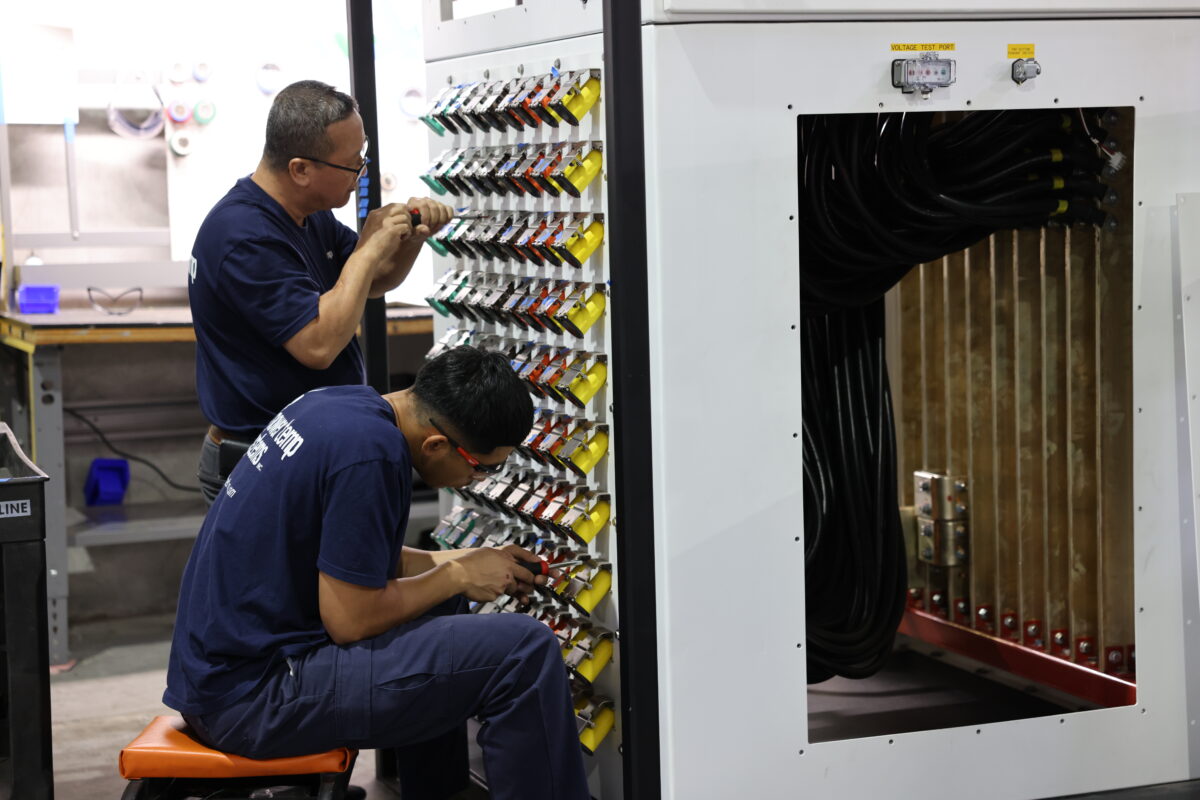
Electrical safety and maintenance rules have changed. For technicians working on generators, transfer switches, breakers, and related electrical equipment, testing and maintenance now carry stricter requirements around worker safety, documented procedures, and access to energized equipment.
This article breaks down what those electrical safety rule changes mean in the field, including what generator technicians must do differently to work safely, reduce liability, and stay compliant.
Key takeaways:
- NFPA 70E, OSHA, and NFPA 70B have raised expectations for how electrical work and maintenance are performed in the field.
- Tasks once treated as routine now require stricter attention to PPE, verification steps, and safe access.
- Technicians can no longer treat open-gear access, quick voltage checks, or improvised service steps as normal parts of the job.
- Altering the system or disconnecting permanent wiring for routine testing and maintenance work is no longer allowed.
- Thermal checks, documentation, and knowing when to stop the job are now part of safer, compliant field work.
What Changed Under NFPA 70E, OSHA, and NFPA 70B
NFPA 70, or the National Electrical Code, sets the baseline for how electrical equipment is installed and used. NFPA 70E, the National Fire Protection Association standard for electrical safety in the workplace, has long served as the practical framework for meeting Occupational Safety and Health Administration (OSHA) electrical safety expectations.
The latest revisions to NFPA 70E more clearly define what safe electrical work requires in the field. As a result, when violations are identified, OSHA and other regulatory entities may now cite the standard in connection with inspections, incidents, or enforcement actions.
NFPA 70B has followed with a similar move for electrical maintenance, by turning what was once recommended practice into a formal standard. In doing so, it raises requirements for how maintenance is performed, documented, and defended when liability questions arise.
For technicians working on generators, transfer switches, breakers, and related electrical equipment, that shift now shows up in day-to-day field work. Testing and maintenance are judged not only by whether the equipment runs afterward, but also by whether the work was performed safely, in the right sequence, with the right personal protective equipment (PPE), and without prohibited access to live or potentially energized components.
What Technicians Must Now Do Differently During Testing and Maintenance
Today’s safety and compliance regulatory landscape requires technicians to approach testing and maintenance differently. Below are six practical changes crews must make to work safely and stay compliant.
1. Stop Treating Open-Gear Access as Routine
Technicians can no longer treat opening enclosures, removing dead fronts, or reaching live areas as a normal first step. If the job starts with exposed components, the work has already moved outside current compliant field practice.
That is especially true when the task is only to check voltage, begin a load test, or make a temporary connection. Those steps may have been common in the past, but they now carry greater safety and liability exposure.
2. Verify Safe Conditions Before Access
One of the clearest changes is the order of operations. Technicians are expected to verify absence of voltage before opening equipment or accessing electrical connection points.
That makes voltage test ports and other external verification methods much more important. They allow crews to confirm conditions before entering the enclosure and reduce unnecessary exposure to live parts.
3. Use the Right PPE, Tools, and Procedure
Personal protective equipment, or PPE, is now part of the standard workflow whenever there is potential exposure to energized equipment. That includes task-appropriate arc flash protection, proper test instruments, and trained personnel who understand the hazard.
This is not just about wearing gear. It is about matching the procedure, the tools, and the protective equipment to the actual task being performed.
4. Do Not Alter the System to Perform the Work
Routine testing and maintenance should not depend on loosening lugs, disconnecting permanent wiring, or modifying the system just to make a connection. Those practices create safety issues and contribute to system degradation over time.
If a site requires disassembly every time a technician needs to test or service the equipment, the problem is larger than the service call. The system is not set up for repeatable, compliant work.
5. Add Thermal Checks and Documentation to the Workflow
NFPA 70B reinforces that maintenance should be repeatable, documented, and based on defined procedures. For technicians, that means thermal imaging, logged readings, and written records are becoming part of the maintenance expectation, not an extra step.
That is especially important during load testing and full-load verification. Heat at breakers and terminations can reveal early signs of degradation before they turn into failures.
6. Know When to Stop the Job
Crews are under more pressure than ever to work safely and defensibly. If the only way to perform the task is to open gear unnecessarily, access live components, or improvise around the system, stopping the job is the correct decision.
That is not a delay tactic. It is part of working within current safety expectations and reducing liability for the technician, the supervisor, and the facility owner.
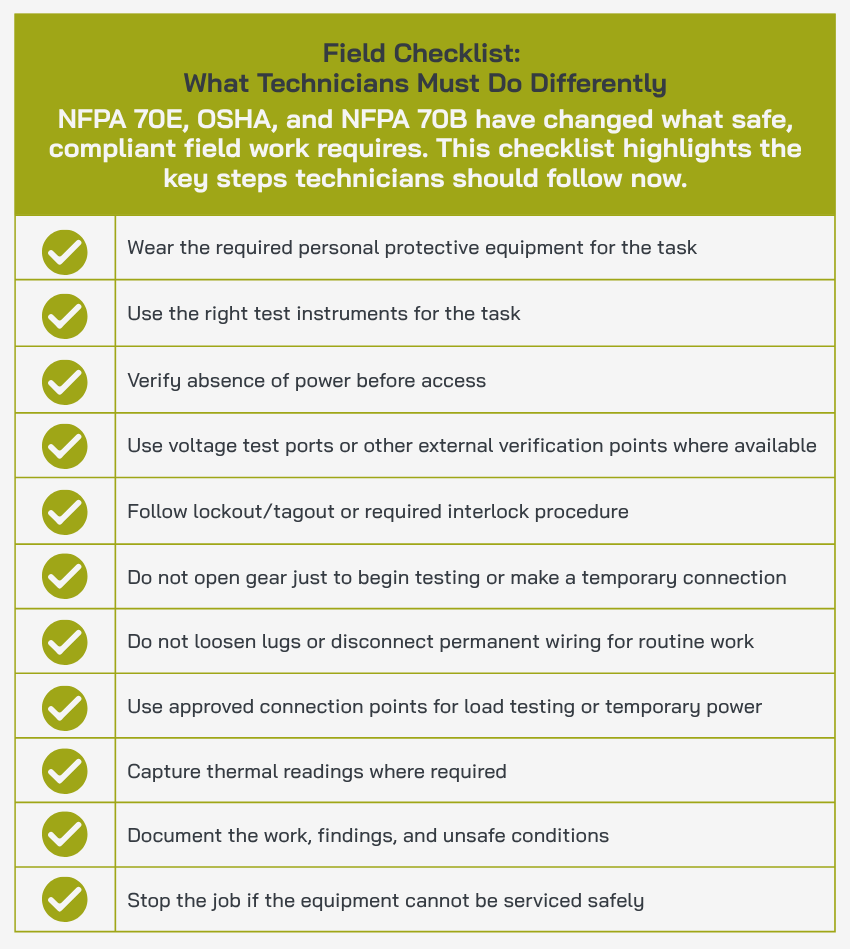
Ready to Make Electrical Field Work Safer and More Compliant?
Testing and maintenance on generators, transfer switches, breakers, and related electrical equipment now require safer, more disciplined field practices. As a result, open-gear access, quick voltage checks, and improvised service steps carry greater safety, compliance, and liability risk.
Power Temp Systems provides solutions that support safer testing, maintenance, and temporary power connections without requiring crews to alter the system or expose live parts during routine work.
Our solutions include:
Explore Power Temp Systems’ solutions that support safer, more compliant testing and maintenance workflows.